
Knee Pain Treatment Near Mount Vernon, Indiana
Knee Pain?
If you live in Mount Vernon, Indiana and are struggling with chronic knee pain, you don’t necessarily need to pursue injections or surgery as your first option. Many patients from Mount Vernon and surrounding areas in Posey County travel to our Evansville office for structured, non-surgical knee pain treatment designed to improve mobility and function. Located just a short drive via Highway 62, our clinic provides advanced conservative care for individuals dealing with arthritis-related stiffness, tendon irritation, and long-standing knee discomfort.
Knee pain is a condition involving irritation, overload, or dysfunction of the structures that make up the knee joint—including cartilage, tendons, ligaments, muscles, and the surrounding joint surfaces. The knee plays a critical role in weight-bearing, movement, shock absorption, and overall mobility.
When these tissues become inflamed, stiff, weakened, or poorly supported, the knee can struggle to tolerate everyday forces such as walking, climbing stairs, squatting, or standing from a seated position. This often leads to symptoms such as pain, stiffness, swelling, clicking, instability, or a feeling that the knee cannot be trusted.
Knee pain may develop gradually from wear and repetitive stress, or it can appear after an injury that never fully healed. While the discomfort is often felt directly at the knee, the problem may also be influenced by mechanics above or below the joint, including the hips, ankles, and surrounding soft tissues.
Knee pain commonly affects one or both knees and can vary from mild discomfort to activity-limiting pain. Identifying the underlying contributors—not just the location of pain—is key to improving function and restoring confidence in movement.
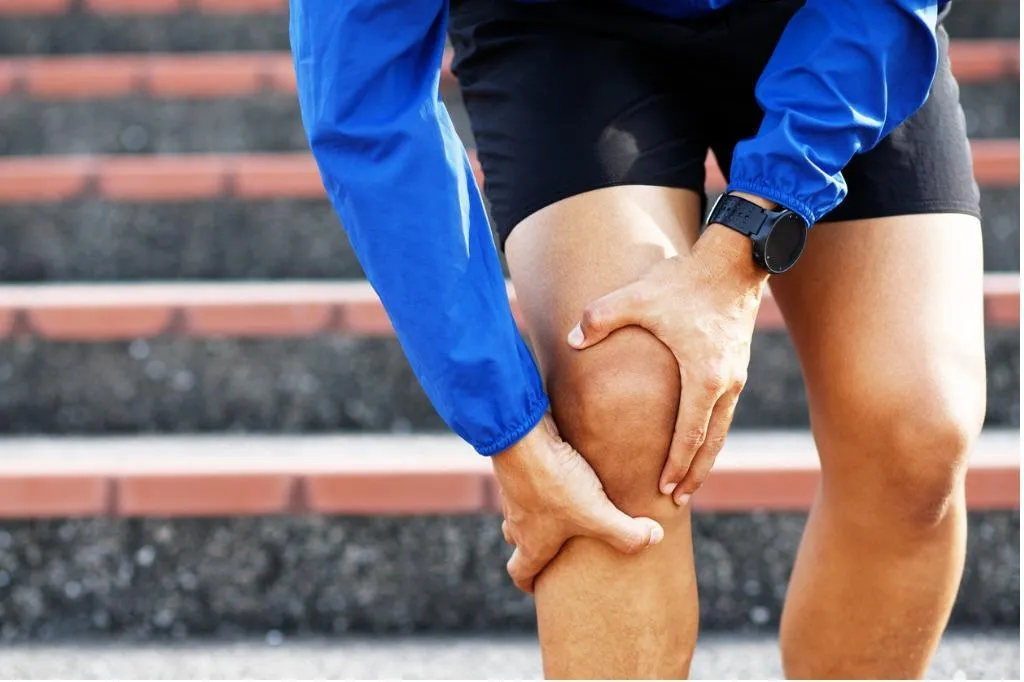
Knee Symptoms
Have been told they are “bone-on-bone”
Feel stiffness after sitting
Experience knee pain with stairs or getting up from a chair
Have swelling or chronic irritation that hasn’t resolved
Want alternatives to injections
Are not ready for surgery
Many individuals seek care after months or even years of gradual decline in knee function.
What Causes Knee Pain?
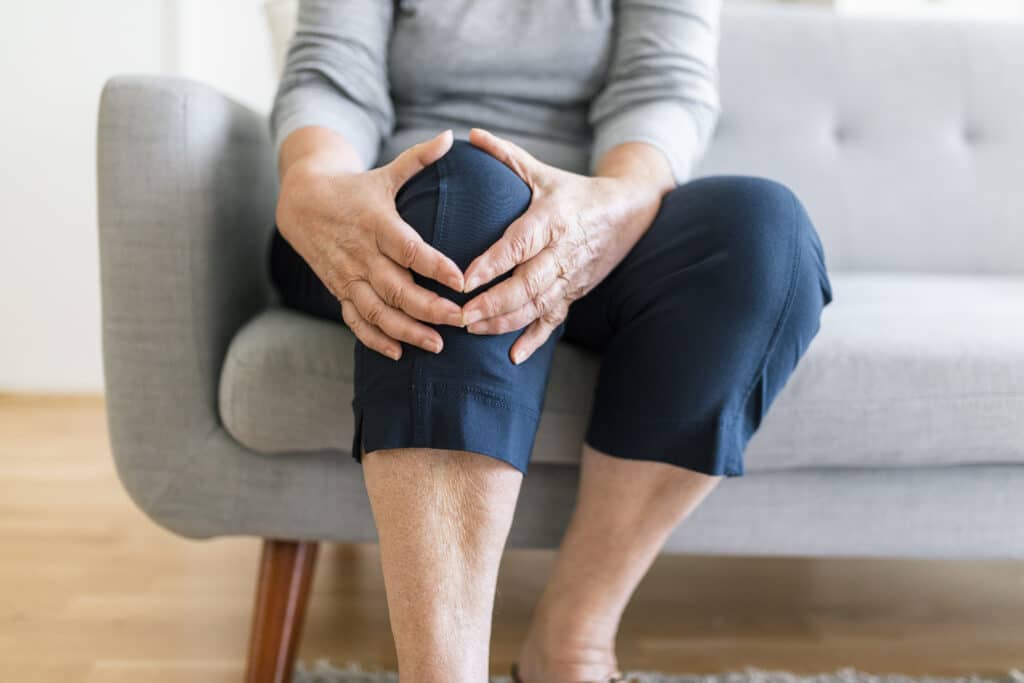
Knee pain rarely comes from a single issue. In most cases, it develops when the tissues of the knee are exposed to more stress than they can tolerate or recover from over time. This can involve joint surfaces, cartilage, tendons, ligaments, muscles, or the way forces are distributed through the knee during movement.
Common contributors to knee pain include:
Joint wear and cartilage stress, often described as arthritis or “bone-on-bone” changes
Tendon overload or irritation, particularly around the patellar or quadriceps tendons
Meniscus irritation or degeneration, which can affect shock absorption and stability
Poor kneecap tracking, leading to uneven pressure within the joint
Residual effects of old injuries that never fully resolved
Reduced tissue flexibility or circulation, limiting the knee’s ability to recover
Movement and alignment factors from the hips, ankles, or feet that increase knee strain
Over time, these factors can reduce the knee’s ability to handle normal daily activities. As tolerance decreases, movements that were once easy—such as stairs, walking, or standing—may begin to trigger pain or stiffness.
Understanding what is contributing to knee pain is an important step toward improving function, restoring movement confidence, and preventing further decline.
Why Knee Pain Is Often Mismanaged
Medications mask symptoms-
Some commonly used injections for joint or pain conditions—especially corticosteroid (steroid) injections—can cause a temporary rise in blood sugar levels. This effect is well-documented and can occur even in people who do not have diabetes, though it is more pronounced in those who do.
Steroids work by reducing inflammation, but they also influence how the body processes glucose. Specifically, they:
Increase glucose release from the liver
Reduce the body’s sensitivity to insulin
Interfere with how cells absorb and use sugar
As a result, more glucose remains circulating in the bloodstream.
Injections don’t repair nerves
Most patients never get tissue-level care

Knee Pain Treatment
Our approach focuses on supporting tissue health and improving the knee’s ability to tolerate everyday movement.
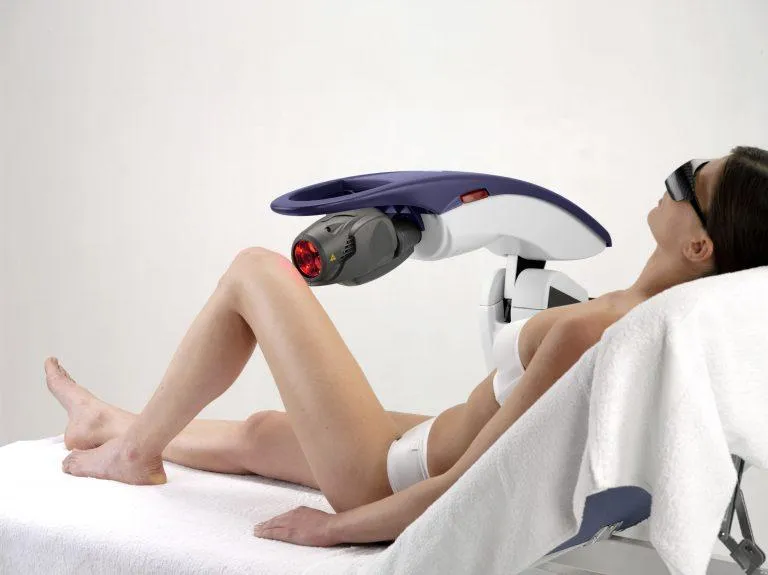
Laser Therapy
Laser therapy is used to support the body’s natural healing processes in tissues around the knee that have become irritated, inflamed, or slow to recover. It works at a cellular level to help improve tissue metabolism, circulation, and inflammatory balance without stressing the joint.
When knee tissues are overloaded or degenerated, their ability to repair and tolerate everyday forces—such as walking, stairs, or standing—can decline. Laser therapy is designed to help create a more favorable environment for recovery by supporting how cells respond to stress and repair demands.
Laser therapy is non-invasive and painless, making it appropriate for a wide range of knee conditions, including chronic pain, stiffness, and post-injury irritation. It is commonly applied to areas such as the joint line, surrounding soft tissues, tendons, and supportive musculature.
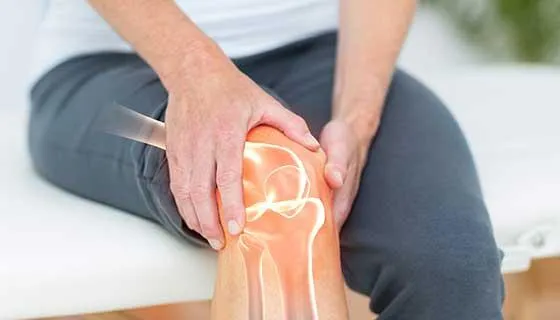
Shockwave Therapy
Shockwave therapy uses targeted acoustic energy to stimulate healing responses in tissues around the knee that have become irritated, overloaded, or slow to recover. It is commonly used for chronic knee pain involving tendons, soft tissues, and areas of long-standing stress where the body’s normal repair processes have stalled.
When knee tissues are repeatedly stressed—through activity, injury, or degenerative change—circulation can diminish and cellular signaling becomes less effective. Shockwave therapy delivers brief, focused pulses that help re-activate these processes by increasing local circulation and stimulating cellular activity involved in tissue repair.
This approach is especially useful for conditions involving tendon irritation, soft-tissue stiffness, and chronic pain patterns that have not responded well to rest or passive care alone.
Knee Pain Program

Early changes often include reduced stiffness or pain sensitivity
Improvements in mobility, walking tolerance, and activity confidence tend to occur gradually
Best results occur when laser and shockwave are used together as part of a structured treatment program
These therapies support healing and function but do not promise instant results or a cure
By combining laser therapy and shockwave therapy, care is directed at helping the knee recover, adapt, and move more comfortably—especially in cases where rest alone or isolated treatments have not been enough.
Our office isn't far from Mt Veron, making it easy for local residents to access conservative, non-surgical knee pain
Insights & Patient Education

FAQ
Can knee pain improve without surgery or injections?
Many cases of knee pain can improve with non-surgical, conservative care focused on supporting tissue health, circulation, and joint function. Treatments such as laser therapy, shockwave therapy, and targeted movement support are commonly used to help the body recover and adapt—especially when surgery or injections are not desired or recommended.
How long does it take to see results from knee pain treatment?
Some patients notice early changes such as reduced stiffness or discomfort within the first few visits. Improvements in mobility, walking tolerance, and activity confidence typically occur gradually over 6-8 weeks. Chronic knee pain usually responds best to consistent care delivered as part of a structured program rather than one-time treatments.
Do you treat patients from Mount Vernon, Indiana?
Yes. Many of our patients travel from Mount Vernon and surrounding Posey County communities.
How far is your office from Mount Vernon?
Approximately 20–25 minutes depending on traffic.
Do you offer non-surgical knee pain treatment?
Yes. Our care is centered around conservative therapies designed to support tissue recovery and function.
Knee Pain Treatment in Mt. Vernon, just down
the road to our Evansville knee pain office.
We regularly serve patients from:
Henderson
Newburgh
Owensboro
Mt. Vernon
Evansville
And surrounding communities.
Lobacz Chiropractic
4910 Temple Ave
Evansville, IN 47715
(812) 401-0994


