
Neuropathy Treatment Near Newburgh Indiana
– Non-Surgical Relief
If you live in Newburgh, Indiana and are experiencing burning, tingling, numbness, or balance changes in your feet, you may not need to rely solely on medication to manage your symptoms. Many patients from Newburgh and surrounding Warrick County communities travel just minutes to our Evansville office for structured, non-surgical neuropathy care.
Located a short drive west along Lloyd Expressway, our clinic works with individuals seeking conservative treatment options focused on improving nerve function and daily performance rather than masking symptoms alone.
Overview - What is Peripherial Neuropathy?
Peripheral neuropathy involves irritation or dysfunction of the peripheral nerves—the nerves responsible for sensation, movement, and automatic body regulation.
When these nerves are stressed, inflamed, or damaged, signals between the brain and body can become distorted.
This may lead to:
Burning sensations in the feet
Tingling or “pins and needles”
Numbness or reduced sensation
Balance instability
Night discomfort
Symptoms often begin gradually and may worsen over time if underlying contributors are not addressed.
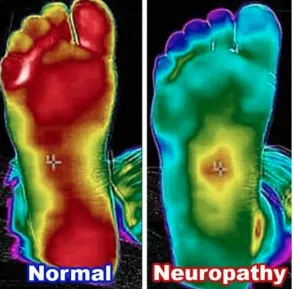
Neuropathy Symptoms
This is a Healthy nerves rely on:
Adequate blood supply
Proper electrical signaling
Normal metabolic and cellular function
Neuropathy can develop when one or more of these systems are disrupted. Common contributors include metabolic stress (such as diabetes), mechanical nerve irritation, reduced circulation, inflammation, toxin exposure, or unknown (idiopathic) causes.
Rather than being a single disease, neuropathy is a descriptive term that reflects how nerves are behaving abnormally.
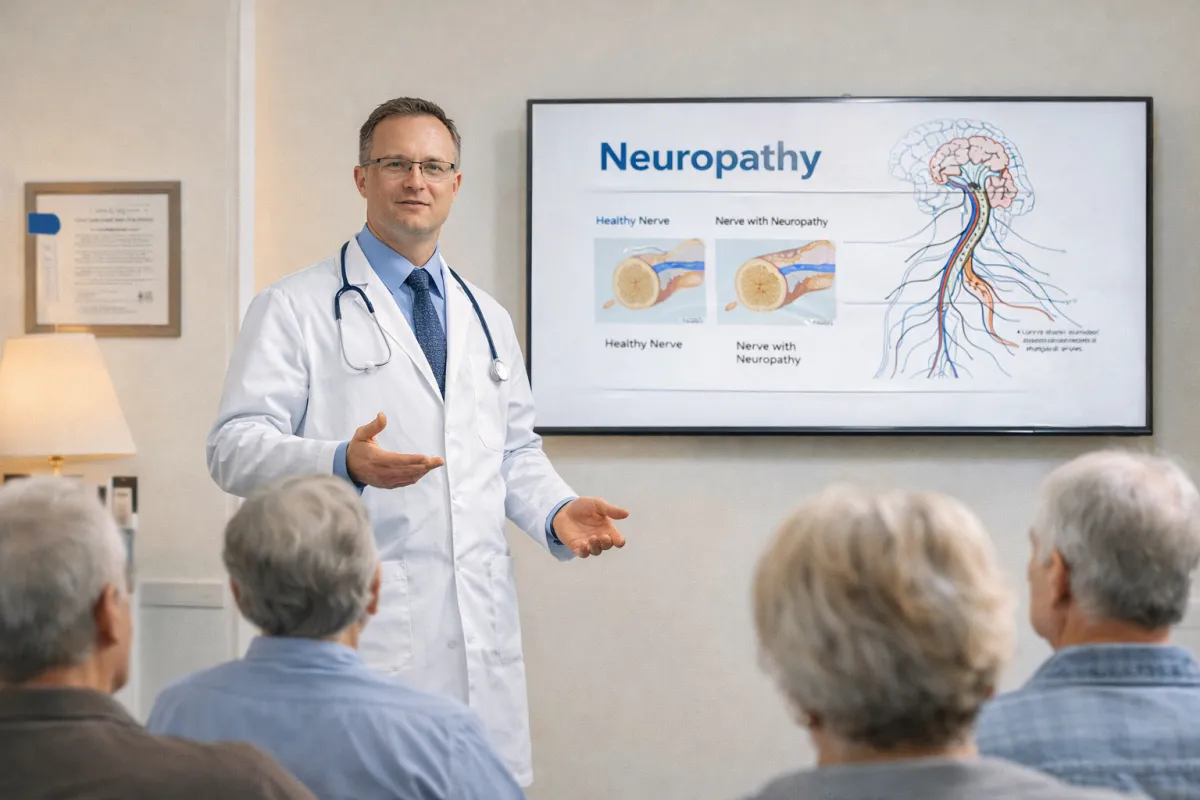
Sensory Neuropathy
Motor Neuropathy
Autonomic Neuropathy
Sensory nerves are responsible for detecting touch, temperature, pain, and vibration.
When sensory nerves are affected, symptoms may include:
Burning or aching sensations
Tingling or “pins and needles”
Numbness or reduced sensation
Increased sensitivity to touch
Pain that worsens at night
Motor nerves control muscle movement and strength.
When motor nerves are involved, patients may experience:
Muscle weakness
Difficulty lifting the foot or toes
Muscle cramping
Loss of coordination
Trouble with walking or balance
Autonomic nerves regulate involuntary functions such as circulation, sweating, digestion, and temperature regulation.
Symptoms associated with autonomic nerve involvement can include:
Cold or discolored feet
Changes in sweating
Lightheadedness when standing
Digestive irregularities
Temperature sensitivity
What Causes Neuropathy?
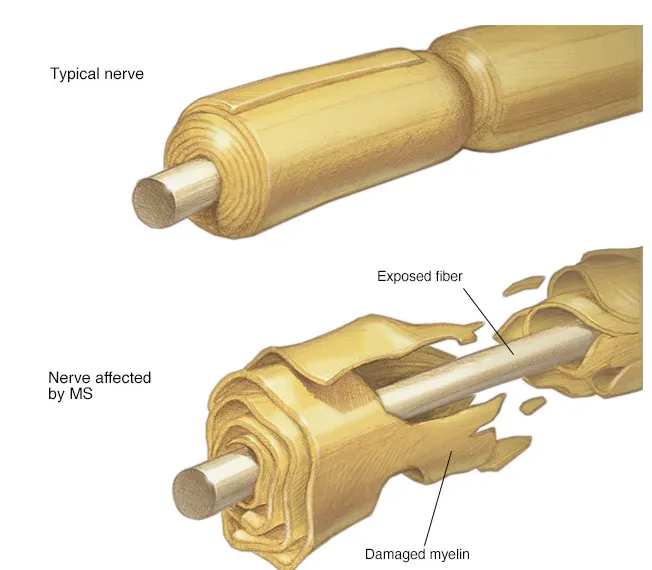
Neuropathy can develop for several reasons. Some of the most common contributors include:
Diabetes or blood sugar dysregulation
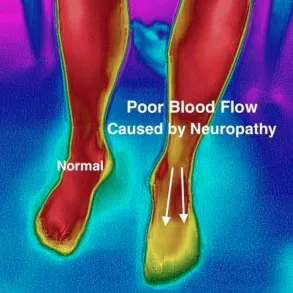
Circulatory compromise
Chronic inflammation
Spinal nerve irritation
Poor circulation
Nutritional deficiencies
Past injuries
Identifying the factors contributing to nerve stress is an important step in building an appropriate care plan.
Why Neuropathy Is Often Mismanaged
Medications mask symptoms
Injections don’t repair nerves
Most patients never get tissue-level care
Surgery rarely indicated

Neuropathy Treatment
Laser Therapy
What Patients Can Expect Realistically
Early relief often shows up as reduced burning or night pain
Functional improvements (balance, sensitivity, walking tolerance) occur gradually
Best results happen when laser is part of a multi-modal care plan, not used alone
Laser therapy doesn’t promise a cure—but it supports the body’s ability to heal nerves, which many patients were told was impossible.
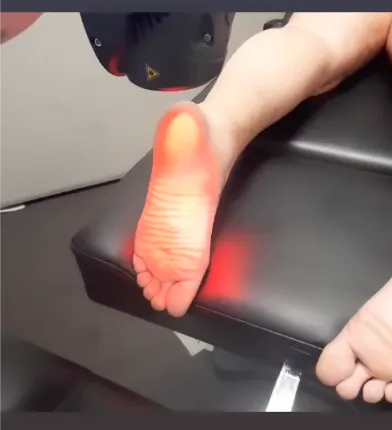
Shockwave Therapy
Shockwave therapy is not designed to “wake up” numb nerves instantly—its primary role is improving blood flow, tissue quality, and nerve environment
Some patients notice reduced deep aching, cramping, or pressure-type pain before changes in surface sensation occur
Improvements in walking tolerance, foot stability, and leg comfort tend to happen gradually over several weeks
Shockwave is most effective when used to support circulation and tissue regeneration, alongside therapies that directly stimulate nerve repair
Shockwave therapy does not claim to regenerate nerves on its own—but by improving the mechanical and vascular conditions around damaged nerves, it helps create an environment where healing becomes possible when combined with a comprehensive neuropathy care plan.
Neuropathy Program

A Structured, Guided Process
This program is not a single treatment or quick fix. It is a guided care process designed to support nerve health, circulation, and function over time. Each phase builds on the previous one, allowing the body to respond gradually and safely.
Early Changes Patients Commonly Notice
In the first few weeks, many patients report:
Reduced burning, stabbing, or night discomfort
Improved comfort at rest
Better tolerance for standing or walking
These changes often come before noticeable improvements in numbness or sensation.
Gradual Functional Improvements
As care continues, patients may experience:
Better balance or stability
Increased awareness of foot position or pressure
Improved walking confidence and endurance
Because nerves heal slowly, progress is typically incremental, not immediate.
Realistic Expectations
The goal is improvement and restoration of function, not overnight results
Some symptoms improve faster than others
Consistency matters—results depend on allowing the body time to adapt and respond
This program does not promise a cure. Instead, it focuses on supporting the body’s natural repair processes, even in cases where patients were previously told “nothing could be done.”
Why a Program Approach Matters
Neuropathy rarely responds to isolated treatments. Better outcomes occur when care is delivered through a coordinated, multi-layered approach that addresses more than just symptoms.
No blogs found
FAQ
What causes neuropathy in Newburgh, IN patients?
Neuropathy in Newburgh patients is often linked to diabetes, long-term inflammation, past injuries, or circulation issues. Symptoms such as burning, tingling, numbness, or balance problems can gradually develop over time. Identifying the underlying cause is an important first step in building a structured treatment plan.
Is neuropathy treatment in Newburgh non-surgical?
Yes. Our Newburgh neuropathy care focuses on non-surgical treatment options. We use advanced therapies such as laser and shockwave therapy along with chiropractic care to support nerve function and circulation without injections or surgery.
How long does neuropathy treatment take?
Neuropathy does not typically improve overnight. Many patients from Newburgh begin noticing early changes in discomfort or sensitivity within several weeks, while balance and functional improvements may take longer. Consistency and a structured plan are key.
Can neuropathy be reversed?
In some cases, nerve irritation can improve when circulation and tissue health are supported early. While not every case is fully reversible, many patients experience meaningful reductions in burning, tingling, or numbness when treated proactively.
How far is Lobacz Chiropractic from Newburgh, Indiana?
Our office is located in Evansville, approximately 10–15 minutes from most areas of Newburgh. Many Newburgh residents choose our clinic for structured, non-surgical neuropathy care due to our focused approach and advanced treatment options.
If you live in Newburgh and are looking for non-surgical knee pain treatment focused on structured recovery rather than short-term symptom suppression, scheduling a consultation may help clarify your options.
Neuropathy Treatment in Newburgh Indiana also serving Evansville, Mt. Vernon, Princeton Henderson, and the Tri-State area.”
When to Seek Help
Red flags:
Progressive numbness
Balance issues
Night pain
Burning feet
Loss of sensation
Lobacz Chiropractic
4910 Temple Ave
Evansville, IN 47715
(812) 401-0994


