
Care for runner’s knee starts with understanding why the pain is happening and how it affects your running. If pain around your kneecap is making running the Pigeon Creek Greenway, walking around Wesselman Woods, or going up everyday stairs uncomfortable, a non-surgical evaluation can help you choose the next step.
Runner’s knee is commonly associated with patellofemoral pain syndrome, a condition involving irritation or stress around the kneecap. It may feel like a dull ache in the front of the knee, especially when running, squatting, climbing stairs, or sitting with your knee bent for a long time.
Understanding the Pattern of Runner’s Knee
Many runners notice symptoms gradually. You may finish a run with mild discomfort, feel stiff getting out of the car, or experience increased pain when walking through the Ford Center or standing during an event.
Common symptoms include:
- Aching around or behind the kneecap
- Pain while running downhill or on hills
- Discomfort with squats, lunges, or stairs
- Clicking, grinding, or popping sensations
- Stiffness after sitting for a long period
- Tenderness when pressing around the kneecap
- A feeling that the knee is not moving smoothly
Runner’s knee can have several contributing factors. Training volume, hip and thigh strength, foot mechanics, running form, joint mobility, and previous injuries may all influence how stress is distributed through the knee.

7 Strategies for Managing Runner’s Knee
1. Begin With a Knee Evaluation
The first step is identifying whether the pain is actually coming from the kneecap area. Several knee conditions can create similar symptoms, including tendon irritation, arthritis, meniscus problems, bursitis, or referred pain from the hip or lower back.
A thorough evaluation may include:
- A discussion of your running history and recent training changes
- Movement and gait observation
- Assessment of joint mobility and alignment
- Strength testing for the hips, quadriceps, and lower leg
- Evaluation of the painful area and surrounding tissues
- Recommendations for imaging or referral when appropriate
At Lobacz Chiropractic, the goal is to look for the true source of pain instead of relying on a cookie-cutter plan. An accurate starting point helps determine whether hands-on care, exercise guidance, advanced therapy, or another type of medical evaluation is appropriate.
2. Temporarily Modify Your Running Load
Complete rest is not always necessary, but repeatedly pushing through increasing pain can keep an irritated knee from settling down. For many runners, a temporary reduction in distance, speed, hills, or frequency is more useful than stopping all movement.
Consider:
- Replacing long runs with shorter, easier sessions
- Choosing flat surfaces instead of hills
- Using cycling, swimming, or an elliptical for lower-impact conditioning
- Avoiding back-to-back hard training days
- Monitoring how your knee feels during the run and the following morning
A practical guideline is to avoid activities that cause sharp pain, noticeable limping, or worsening symptoms the next day. Your return-to-running plan should progress gradually rather than jumping directly back to your previous mileage.
3. Strengthen the Hips and Quadriceps
The hip and quadriceps muscles help control how the leg moves when your foot meets the ground. If these muscles are weak or fatigued, the knee may experience more stress during running, stair climbing, or single-leg movements.
A personalized strengthening program may include:
- Glute bridges
- Side steps with a resistance band
- Controlled step-ups
- Straight-leg raises
- Supported squats
- Hip abduction exercises
- Calf and hamstring strengthening
Research indexed in PubMed supports exercise therapy for patellofemoral pain, particularly programs that address both the hip and knee. Exercises should be selected and progressed according to your symptoms, strength, and movement quality.
4. Improve Mobility and Running Mechanics
Tight calves, hamstrings, hip muscles, or quadriceps can affect how your leg absorbs force. Limited ankle mobility may also cause compensations farther up the leg.
Mobility work may include:
- Gentle calf stretching
- Hamstring mobility
- Quadriceps and hip-flexor stretching
- Ankle range-of-motion exercises
- Controlled mobility drills before running
Running technique may also deserve attention. Changes in cadence, stride length, foot placement, or hill strategy can sometimes reduce the load placed on the knee. The right adjustment depends on your individual movement pattern, so changes should be introduced gradually.
5. Use Supportive Self-Care During Flare-Ups
Simple measures may help calm symptoms while you address the underlying contributors. These approaches are usually most useful as part of a broader plan rather than as a permanent solution.
You may discuss the following with your healthcare provider:
- Applying a cold pack for 10 to 15 minutes after activity
- Using temporary compression if swelling is present
- Elevating the leg when the knee feels irritated
- Wearing supportive shoes that fit properly
- Using taping or a brace if recommended
- Taking over-the-counter medication only as directed and when medically appropriate
The Mayo Clinic’s overview of patellofemoral pain syndrome explains why activity modification and strengthening are commonly used before considering invasive treatment.
6. Consider JointWave Shockwave Therapy When Pain Persists
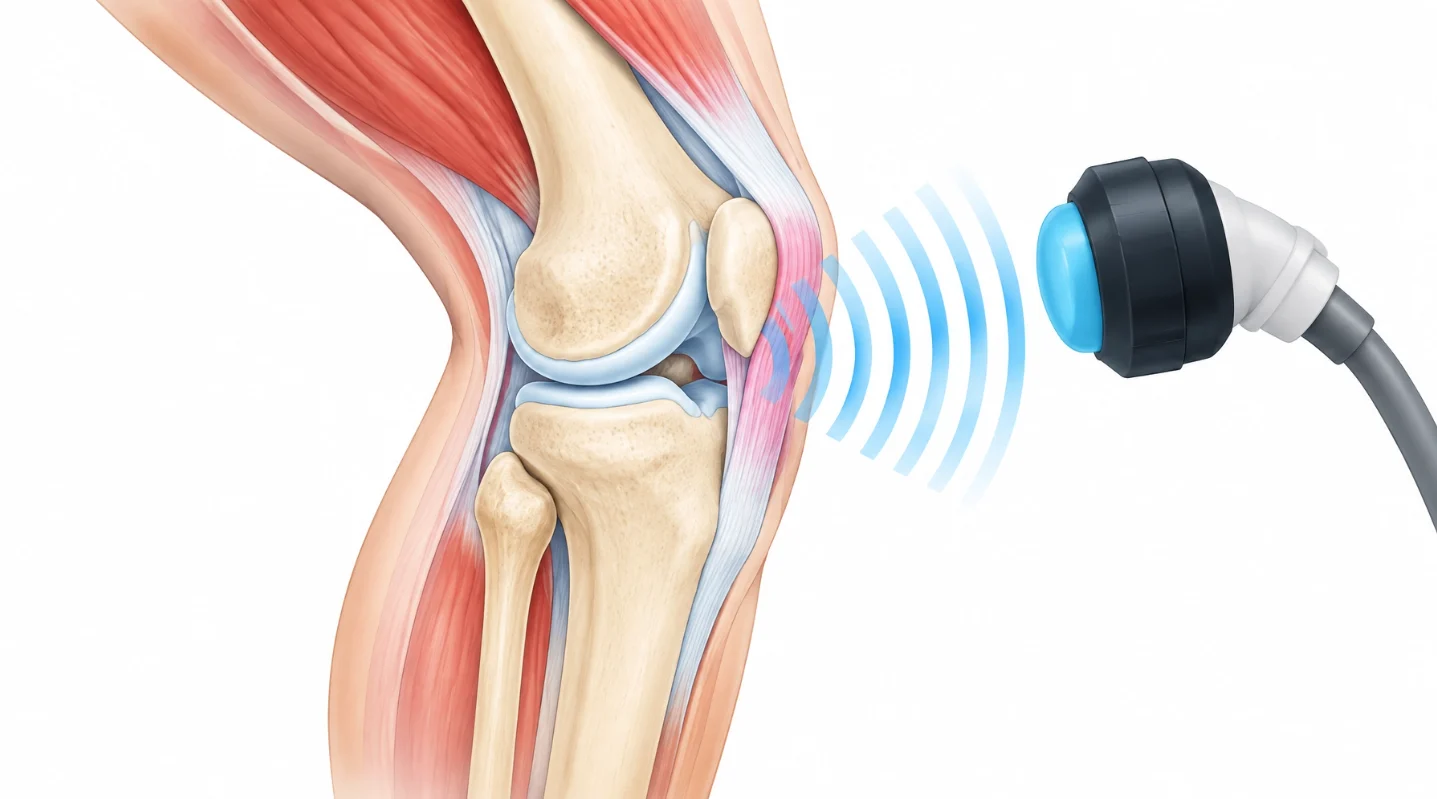
When runner’s knee symptoms continue despite rest and basic changes, your treatment plan may need to address stubborn soft-tissue irritation or restricted local circulation. Shockwave Therapy is a non-invasive technology that uses targeted acoustic energy to stimulate blood flow and support the body’s tissue-repair process.

Lobacz Chiropractic is an exclusive JointWave provider. JointWave Shockwave Therapy may be considered when appropriate after an evaluation, particularly for chronic pain that has not responded to rest or conventional approaches.
Treatment is not automatically right for every runner or every knee condition. The purpose of an evaluation is to determine whether the therapy fits the suspected pain source and your overall goals.
7. Add Class 4 Laser Therapy When Inflammation and Recovery are Concerns
Class 4 MLS Laser Therapy uses focused light energy to support cellular activity, circulation, and recovery in muscles, joints, and soft tissue. The treatment is gentle and painless for many patients and may be used alongside hands-on care and movement recommendations.

Class 4 Laser Therapy is not a substitute for correcting training errors, strength deficits, or movement restrictions. Instead, it may serve as one part of a personalized runner’s knee relief in Evansville plan when reducing irritation and supporting recovery are priorities.
When Should You Seek an Evaluation?
Schedule an evaluation if your symptoms:
- Continue for more than a few weeks
- Return every time you resume running
- Limit stairs, walking, work, or sleep
- Cause you to change the way you walk
- Are accompanied by swelling, locking, or catching
- Make the knee feel unstable or unable to support you
Severe swelling, an inability to bear weight, a major injury, redness with fever, or a locked knee warrants prompt medical attention. A healthcare professional can help determine whether you need chiropractic care, physical therapy, sports medicine, orthopedic consultation, or another form of treatment.
For general information about knee pain and non-surgical care, visit Lobacz Chiropractic’s page on knee pain treatment in Evansville. You can also review our chiropractic care services to learn how hands-on care may fit into a broader mobility plan.
Getting Back to the Pigeon Creek Greenway
Returning to running should be based on function, not only on whether the knee feels better for a few hours. Start with walking, brisk walking, or short intervals on a level surface before increasing distance or speed.
A gradual progression may look like:
- Walk without pain or limping.
- Add short run-walk intervals.
- Increase running time before increasing speed.
- Reintroduce hills and uneven paths later.
- Avoid increasing distance, intensity, and frequency at the same time.
- Continue strength exercises as your running improves.
This approach can help you enjoy the Pigeon Creek Greenway, Wesselman Woods, Mesker Park, and other Evansville-area routes with more confidence. It also gives you a way to notice early warning signs before a manageable problem becomes a longer interruption.
Take the Next Step
You do not have to assume that ongoing knee pain automatically means injections or surgery. Conservative care can include accurate evaluation, activity changes, targeted strengthening, hands-on treatment, and advanced non-invasive therapies when clinically appropriate.
If you are in Evansville, Newburgh, Henderson, Darmstadt, or the surrounding Tri-State area, you can schedule a consultation through the New Patient Calendar. The next step is a conversation about what you are feeling, what activities you want to resume, and what may be contributing to the problem.
At Lobacz Chiropractic, I believe in finding the root cause of pain instead of chasing symptoms one appointment at a time. My mission is to provide honest explanations and individualized care that supports lasting relief, improved mobility, and a return to the activities that matter to you.
Lobacz Chiropractic
4910 Temple Ave
Evansville, IN 47715
Phone: 812-401-0994
Website: lobaczchiropractic.com
continue reading