
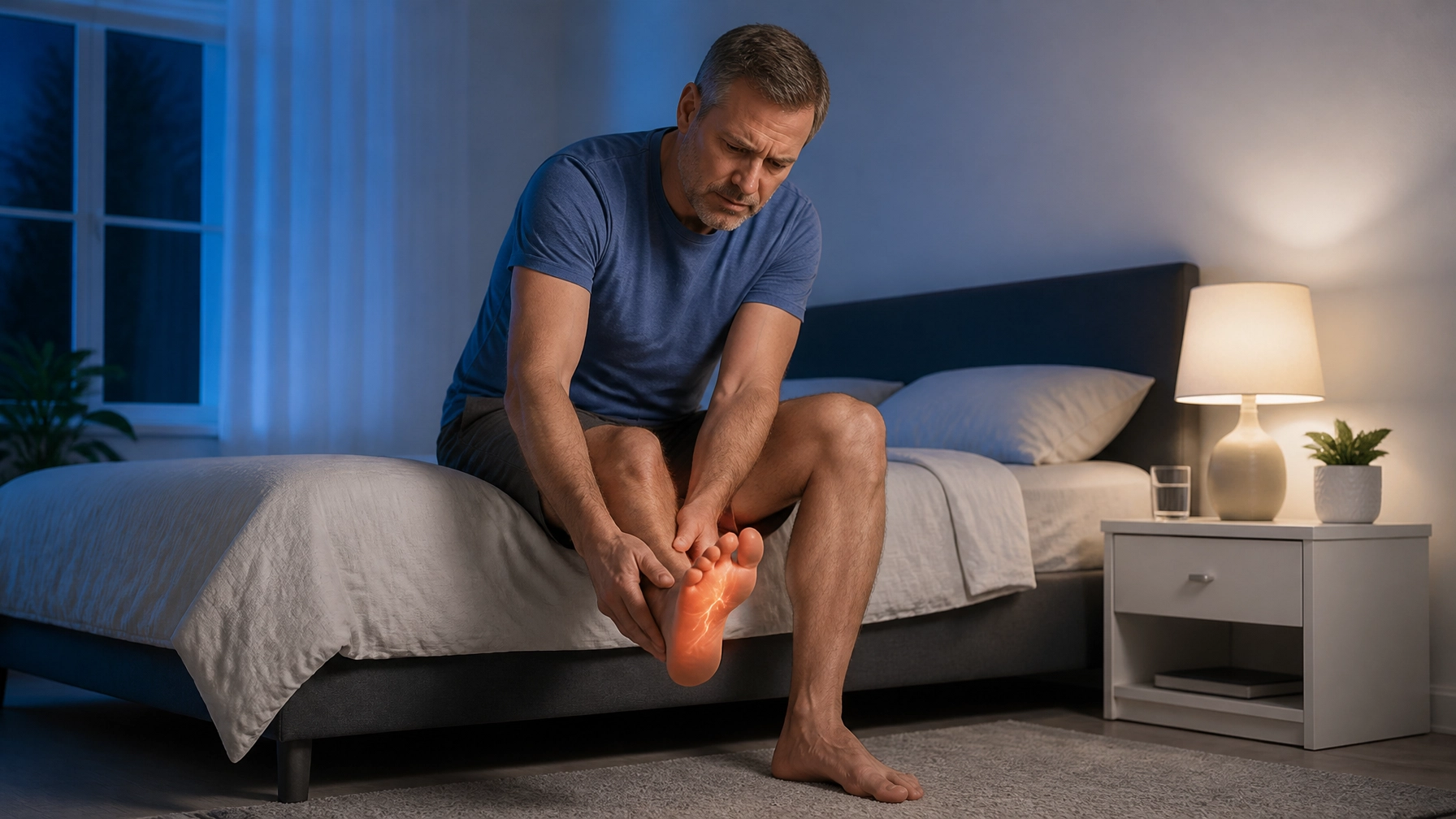
Nighttime neuropathy can be especially disruptive when burning, tingling, numbness, or nerve pain becomes worse as soon as they lie down. When symptoms keep you awake, make blankets uncomfortable, or force you to walk around the house at 2 a.m., the problem deserves more than a temporary fix.
Nighttime nerve symptoms can interfere with sleep, work, exercise, and simple routines. Whether you live near Eastland Mall, the Ford Center, Mesker Park, or within the surrounding Tri-State area, understanding why neuropathy flares at night is the first step toward finding an appropriate plan.
Why Symptoms Worsen After Dark
Neuropathy occurs when nerves are irritated, damaged, or not communicating normally with the brain and body. The underlying cause may involve diabetes, nutritional deficiencies, medication effects, spine or joint problems, circulation concerns, or another medical condition.
Symptoms may feel stronger at night for several overlapping reasons:
- Less distraction: During the day, conversations, work, errands, and movement compete for your attention. At night, the brain has fewer distractions, so abnormal nerve signals become more noticeable.
- Changes in temperature: Cooler bedroom temperatures or uncovered feet may trigger burning, prickling, or aching in sensitive nerves.
- Position changes: Lying down can alter pressure around the lower back, hips, legs, or feet. Certain positions may irritate a nerve or make existing symptoms feel more intense.
- Circulation changes: Reduced movement during sleep may affect blood flow and fluid movement in the extremities.
- Restless nerve firing: Damaged nerves can send irregular signals even when there is no new injury. Patients sometimes describe this as buzzing, crawling, electrical shocks, or an inability to keep their legs still.
- Medication timing: If a medication wears off before bedtime, symptoms may appear more noticeable during the evening.
According to the Mayo Clinic’s overview of peripheral neuropathy, identifying the cause is an important part of managing symptoms. Relief should not be based only on masking the sensation.

How Nighttime Nerve Symptoms Affect Sleep
Poor sleep can make pain feel more difficult to manage the following day. After several nights of interrupted rest, many people notice lower energy, reduced concentration, increased irritability, and less motivation to exercise.
Nighttime neuropathy may cause you to:
- Wake up from burning or stabbing sensations
- Feel uncomfortable when sheets touch your feet
- Repeatedly change positions
- Walk around to “shake out” your legs
- Avoid going to bed because symptoms are predictable
- Feel tired even after spending enough time in bed
This can create a cycle. Pain interrupts sleep, poor sleep increases sensitivity to discomfort, and reduced activity may contribute to stiffness and circulation changes.
Finding the Cause of Nighttime Symptoms
Rest may temporarily reduce irritation, but rest alone does not always correct the reason nerves are sending abnormal signals. Similarly, over-the-counter medications may dull discomfort without explaining why numbness, tingling, or burning continues.
A thorough evaluation may consider:
- Blood sugar history and diabetic neuropathy risk
- Numbness or burning in one foot versus both feet
- Lower-back, hip, or pelvic involvement
- Muscle weakness or balance changes
- Previous injuries or surgeries
- Vitamin B12 and other nutritional concerns
- Medication side effects
- Foot structure and movement patterns
- Circulation and skin changes
A medical referral may be appropriate when symptoms are unexplained, rapidly progressing, or associated with significant weakness. At Lobacz Chiropractic, the goal is to understand the factors contributing to your symptoms and determine whether conservative care is appropriate.
Practical Strategies to Try at Home
While you arrange an evaluation, several conservative strategies may help reduce nighttime aggravation. These suggestions are not a substitute for diagnosis, particularly if you have diabetes or progressive symptoms. If your symptoms overlap with burning feet relief concerns or questions about numb feet causes, those related articles may also be helpful.
Try the following:
- Keep the bedroom comfortable without making it excessively cold.
- Use loose, breathable socks if foot contact with bedding is uncomfortable.
- Consider a bed cradle or positioning method that keeps heavy blankets off sensitive feet.
- Try sleeping on your side with a pillow between your knees.
- If lying on your back, place a pillow beneath your knees to reduce low-back tension.
- Take a brief, easy walk after dinner if movement does not increase your symptoms.
- Perform gentle ankle circles, calf stretches, or toe movements before bed.
- Limit alcohol and caffeine later in the day.
- Follow a consistent sleep schedule.
- Avoid heating pads on numb feet because reduced sensation increases the risk of burns.
- Ask your prescribing physician whether medication timing should be reviewed.
A cool (not icy) foot soak may feel soothing for some people, but stop if it increases pain or numbness. People with reduced sensation should check water temperature carefully and inspect their feet afterward.
MLS Laser Therapy
MLS Laser Therapy is a non-invasive treatment that uses focused light energy to support cellular activity. It works through photobiomodulation, a process in which light interacts with cells and mitochondria to help increase ATP, or cellular energy.
The MLS system uses a patented Multiwave Locked System that synchronizes continuous 808nm and pulsed 905nm wavelengths. The combination is designed to support circulation, reduce inflammation and pain, and promote tissue repair without injections or surgery.
The MLS Laser Therapy information from CE Lasers explains that the FDA-cleared Class IV laser uses synchronized emissions to provide therapeutic energy while maintaining a higher safety profile than some other high-power laser systems.
For someone experiencing nighttime nerve symptoms, MLS Laser Therapy may be considered when local inflammation, soft-tissue irritation, circulation concerns, or musculoskeletal contributors are part of the overall presentation. Treatment recommendations depend on the individual evaluation, and laser therapy is not a replacement for medical management of conditions such as uncontrolled diabetes.

Stimpod NMS460 Therapy
Stimpod NMS460 PRF Therapy is another non-invasive option that focuses on abnormal nerve signaling. A targeted pulsed radiofrequency electromagnetic waveform is delivered through a probe positioned near the nerve.
The purpose is to help calm overactive nerve communication. Unlike an injection or surgical procedure, Stimpod therapy is delivered externally and does not require cutting, needles, or anesthesia.
The AlgiaMed Stimpod NMS460 PRF Therapy System provides additional information about this technology and its use in addressing nerve-related symptoms.
For patients with nighttime nerve symptoms, Stimpod may be discussed when symptoms include electrical sensations, burning, tingling, or restless nerve activity. The appropriate treatment area and settings depend on the nerves involved and the findings from the evaluation.
Chiropractic Care and JointWave
Chiropractic care may be relevant when joint restriction, posture, muscle tension, or spinal mechanics are contributing to irritation around a nerve. The objective is to improve movement and reduce mechanical stress rather than chase symptoms without understanding their source.
You can learn more about personalized chiropractic care in Evansville.
JointWave Shockwave Therapy may also be considered when a patient has overlapping soft-tissue or joint problems, such as foot, ankle, hip, or lower-back dysfunction. Shockwave Therapy uses targeted acoustic energy to stimulate circulation and address stubborn tissue changes. It is not a direct cure for every form of neuropathy, but it may have a role when musculoskeletal restrictions are contributing to discomfort.

Some care models still depend on methods developed decades ago, with limited diagnostic information and treatment plans shaped primarily by what insurance will reimburse. Modern non-surgical therapies such as MLS Laser Therapy, Stimpod, chiropractic care, and JointWave may not be included in every insurance plan, but that does not make them irrelevant when a patient needs additional options.
The key is using technology thoughtfully and explaining whether a therapy may fit your condition.
Building an Individual Care Plan
A practical plan may combine several steps:
- Identify likely contributors. This may include a review of symptoms, movement, medical history, and available diagnostic information.
- Address mechanical factors. Chiropractic care may help improve mobility when joints, muscles, or spinal mechanics are involved.
- Support irritated tissues. MLS Laser Therapy may be used to support cellular energy, circulation, inflammation control, and tissue repair.
- Calm abnormal nerve signaling. Stimpod NMS460 may be considered for appropriate nerve-related symptoms.
- Monitor progress. Your care plan should also track sleep quality, walking tolerance, balance, sensation, and pain levels to help determine whether the plan is helping.
People travel to Lobacz Chiropractic from across Evansville and nearby communities, including Newburgh, Henderson, and Owensboro. If you are within roughly a 20-mile radius of our Temple Avenue office, we welcome the opportunity to explain your options clearly.
When to seek prompt medical attention
If you notice the following changes, prompt medical attention is important.
- Sudden numbness or rapidly worsening symptoms
- New muscle weakness or difficulty walking
- Loss of balance or coordination
- Loss of bladder or bowel control
- An open sore, blister, color change, or infection on a numb foot
- Fever, severe swelling, or rapidly increasing pain
- Symptoms associated with uncontrolled diabetes
People with diabetes should not ignore foot numbness or wounds. Reduced sensation can make injuries difficult to notice, and prompt medical evaluation may help prevent complications.
If nighttime burning, tingling, or numbness has become a regular problem, you can learn more about neuropathy care at Lobacz Chiropractic. To discuss your nighttime symptoms, schedule a new-patient evaluation in Evansville.
At Lobacz Chiropractic, I believe lasting relief begins with understanding the root cause of a patient’s discomfort. My mission is to use careful evaluation, modern non-surgical technology, and individualized care to help people in Evansville work toward improved comfort, function, and sleep.
Lobacz Chiropractic
4910 Temple Ave
Evansville, IN 47715
Phone: 812-401-0994
Website: lobaczchiropractic.com


